Living Records
Biological data storage, preservation
Exhibited at BioBAT Art Space
6/13/2026 - 7/24/2026
Liam Davis
Michelle Shengyu Li
and Sofia Klimkowski Arango
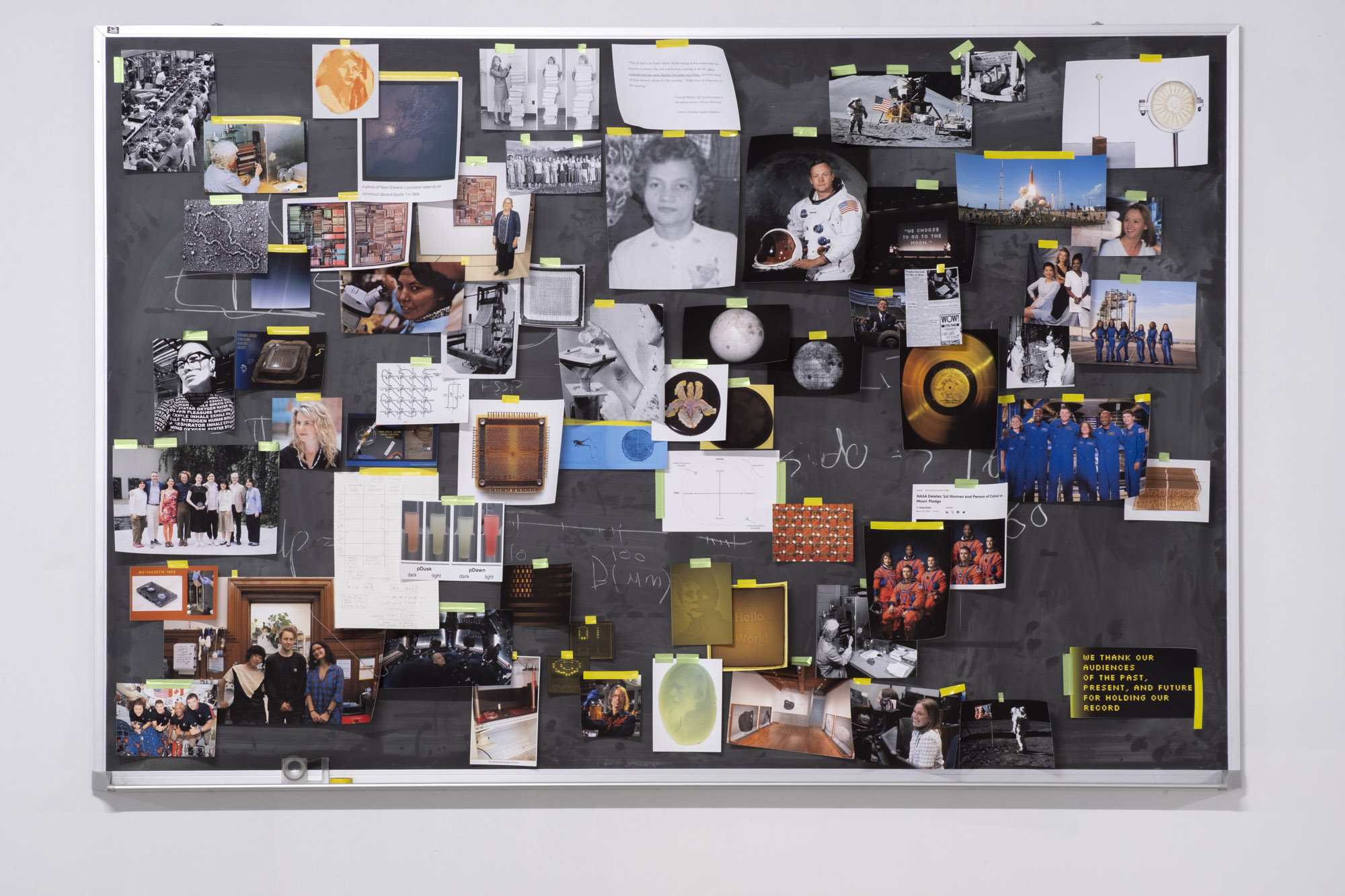
Living Record's archive of photos, lab experiments, and writings from their past year of investigation, presented on a chalk board donated by the NASA Goddard Institute for Space Studies.
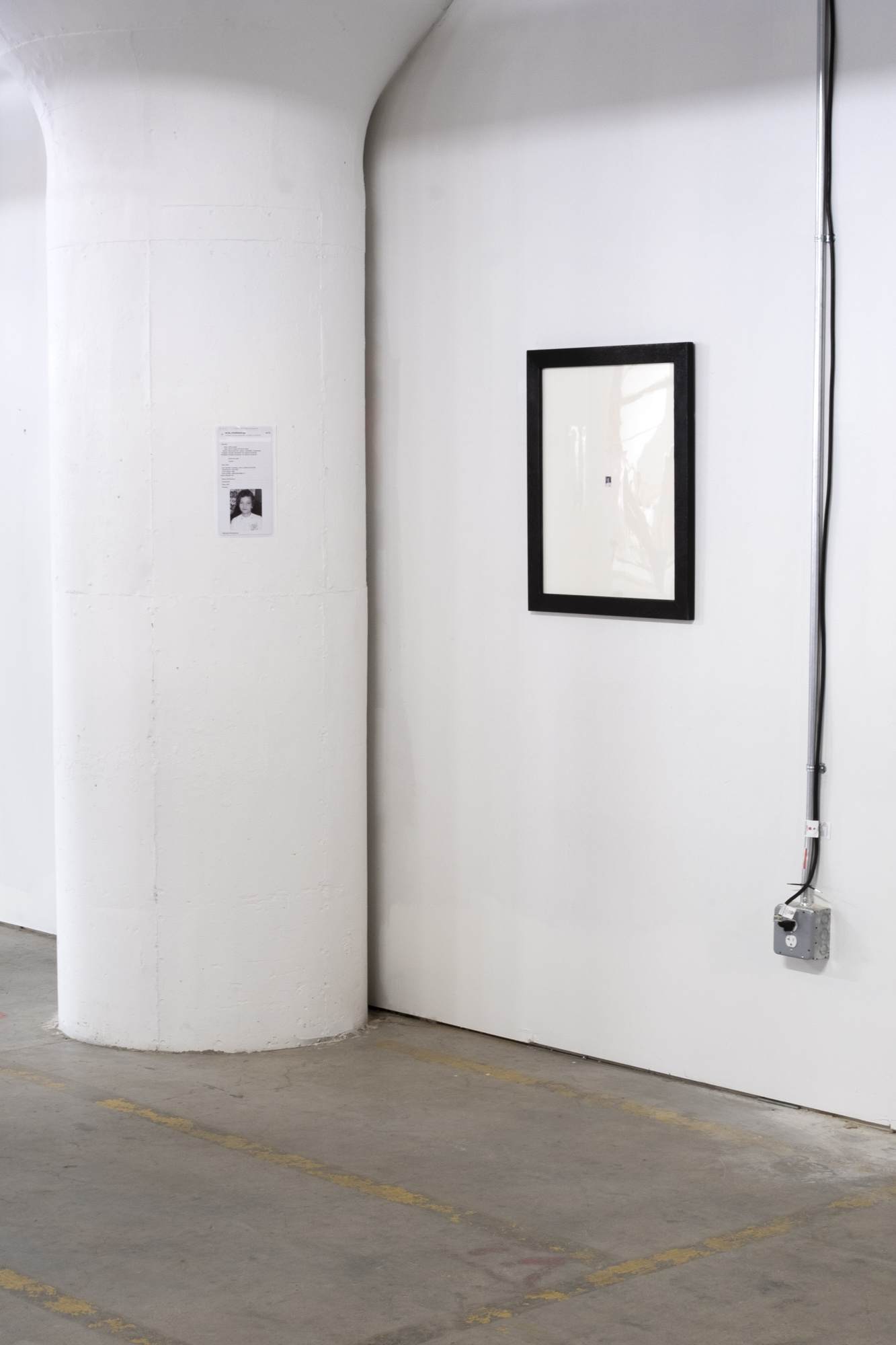
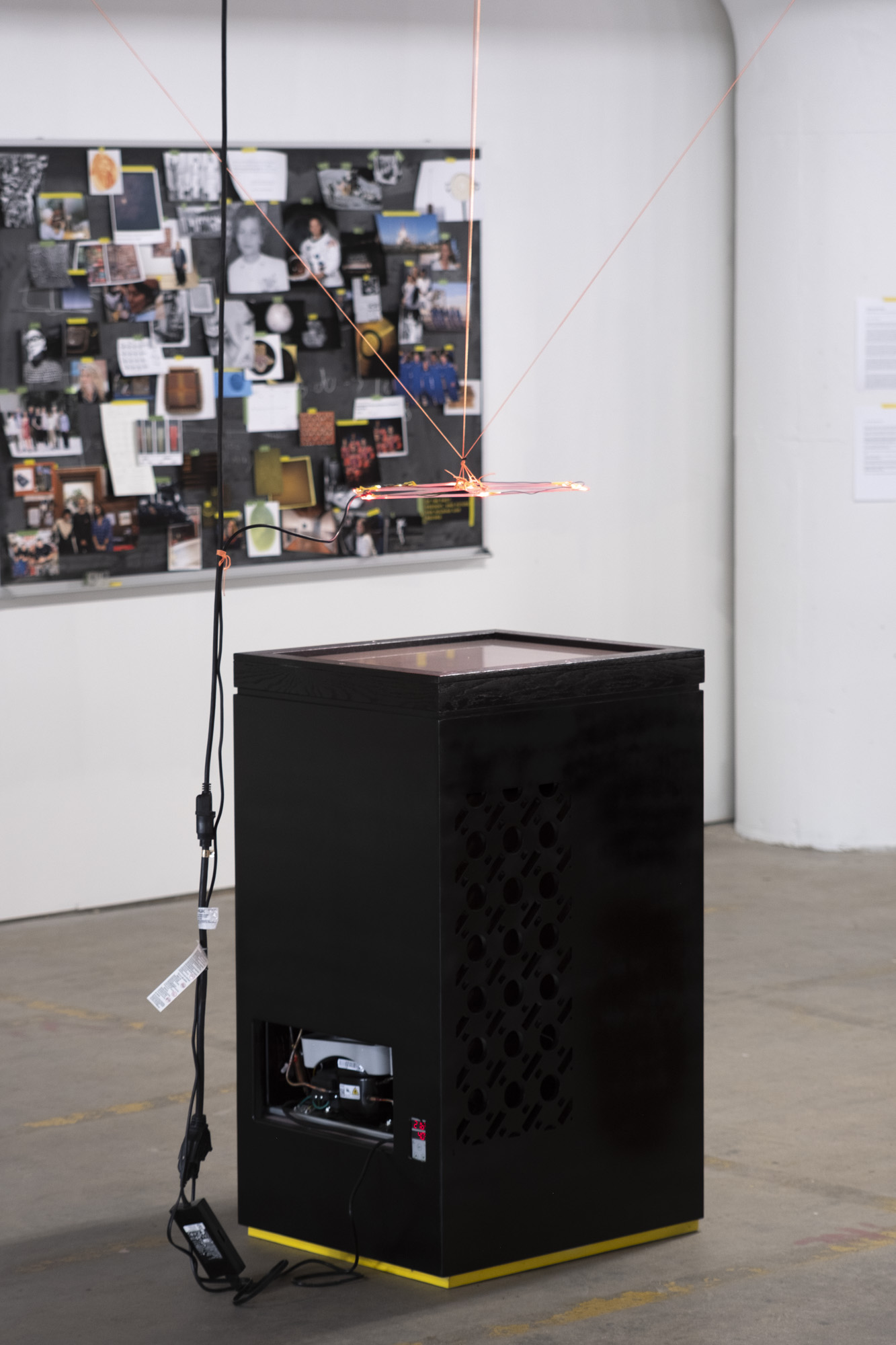
With the advent of digital images and digital information storage, photographs have become ever present and somehow more ephemeral. A photo is no less tangible than it ever was, but it exists often on someone else’s computer— easily lost or forgotten.
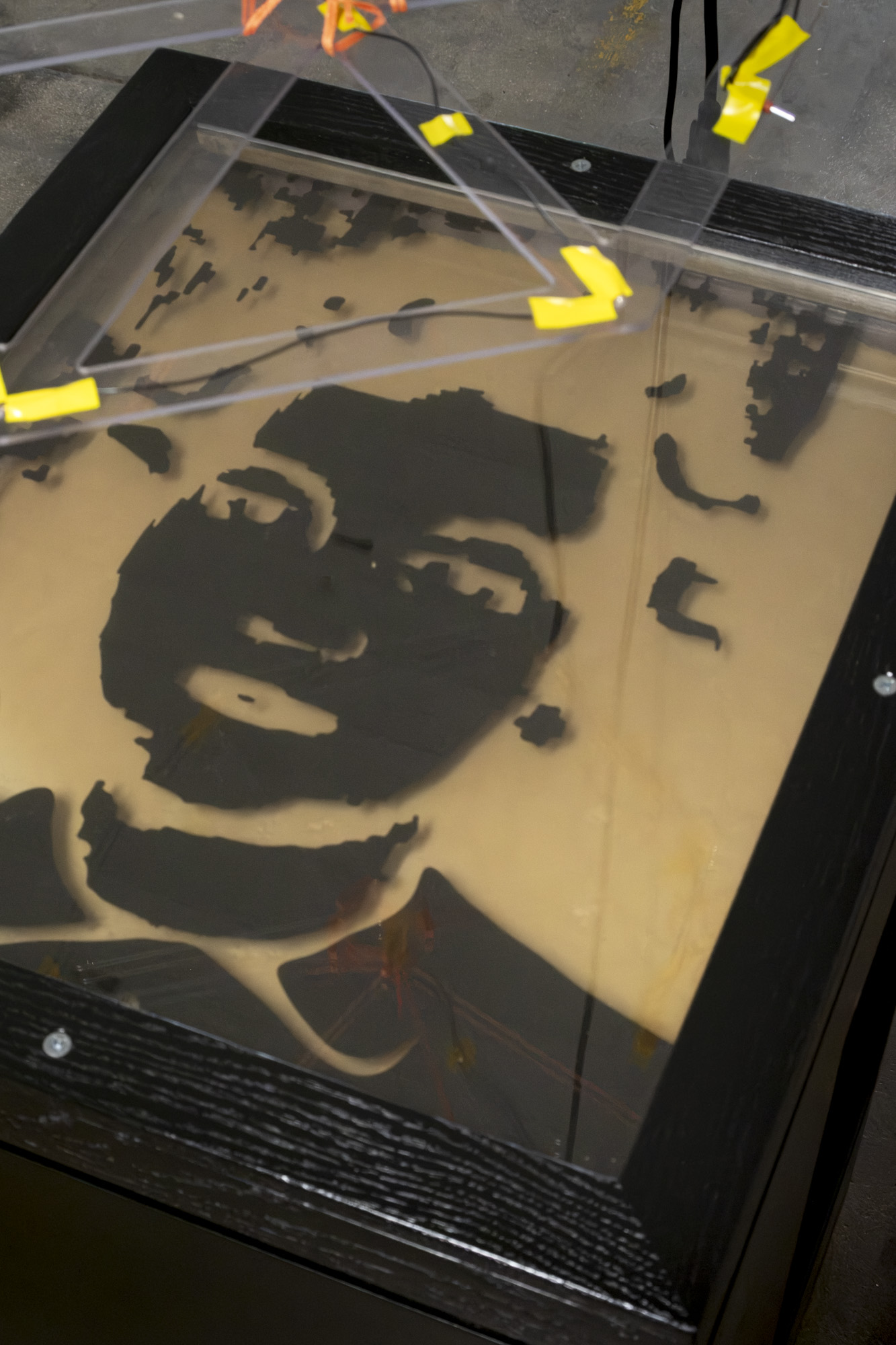
Living Records explores the responsibilities of image culture in shaping collective memory through developing and encoding living images with photoresponsive E. coli. Building upon the 2022 study “Optogenetic Control of Bacterial Expression by Red Light” published in ACS Synthetic Biology, they use the pREDawn and pREDusk plasmid systems to toggle chromoprotein gene expression through red light. Akin to a darkroom process with microbes instead of metals, the red light exposure is what allows colours like orange, pink, or blue to develop. Simultaneously, through utilising an online ‘text to DNA’ converter, they design codons in PCR primers to encode data within the color-amplifying DNA of the organisms. Each cell becomes like a living byte, pixel, or silver halide particle.
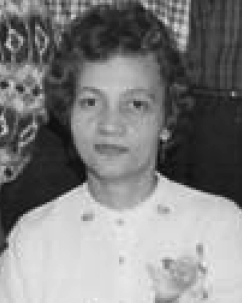 The project iterates on a screenshot of Hilda G. Carpenter— the Black MIT lab assistant and technician who wove the first core rope memory circuit, the same technology later used for the lunar and command modules of the Apollo 11 mission. While astronauts like Neil Armstrong or presidential mandates like JFK’s ‘We choose to go to the moon’ speech are vastly documented with high resolution, the manual and often feminine labour and intelligence of individuals like Carpenter often go unnamed, forgotten, and faceless in history. How do these decisions shape collective understandings of who has been in the room of progress?
Due to the lack of publicly available images of Carpenter, the clearest portrait the team was able to acquire was through a screenshot of a group photo of the MIT LINC team. The JPG file, “HILDA_POORIMAGE.jpg” references Hito Steryl’s scholarship on “poor images”— screenshots, copies, and photos of ‘dubious genealogy’ that are “poor because they are not assigned any value within the class society of images.” Through tending to an enlarged 20”x24” bacterial portrait of her poor image, this translation offers a new resolution of her likeness and legacy to grow. Designing a custom refrigerated pedestal which acts as both frame and petri dish, the image can live within the gallery.
The team investigates the technological advancements from the 1969 Apollo 11 mission, and how photographic biases in the preservation and platforming of the lives at the forefront of human advancement follow us to this day. Spurred on this pathway through witnessing the removal of DEI language in the Artemis mission statement from the official NASA website, their concern lies in the ways blackboxing of information has seeped into all aspects of preservation— whether it’s imagery, article, or explanation. In response to systems and technology that erase, they ask: which images stay with us and how does a group keep them alive?
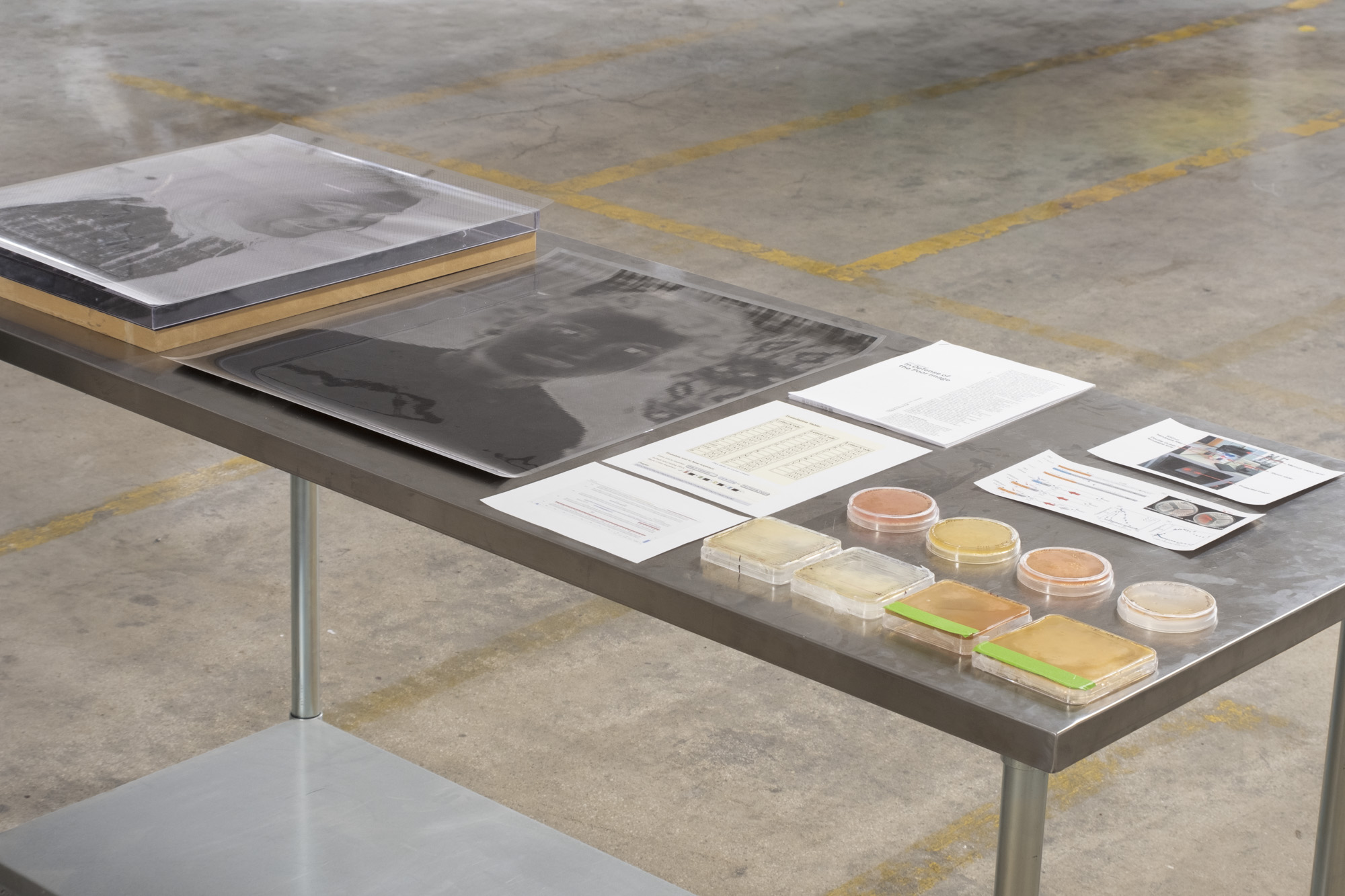
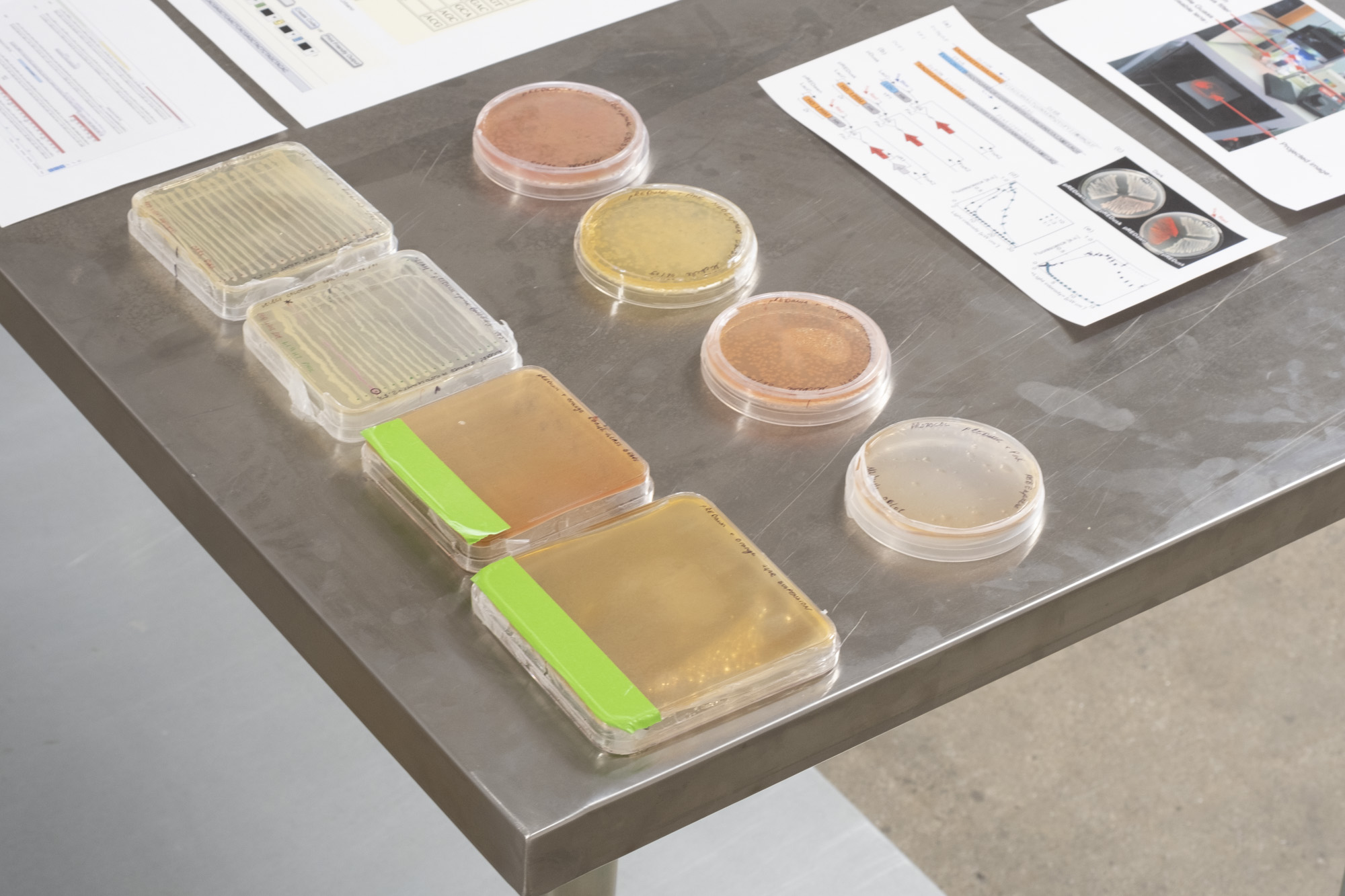
Research display table with large scale 20"x24" custom petri dish, transparency mask tests, figures and referenced papers, and petri dishes housing the genetically modified E. coli small scale exposure tests.
Acknowledgements
Thank you to Ryan Hoover for his ongoing mentorship, time, and care in expanding our understanding and tools for the futures we choose to grow and the pasts we promise to hold.
Thank you to Ian Ong and Teagan Crawford-Greene for their irreplaceable contributions and intelligence as our team members in the first rendition and conception of this project.
Thank you to the BioBAT Art Space team, namely Elena Soterakis, Doug Chapman, Sara Hodaie, Alvaro Azcarraga, Izel Villarba and Sophia Rizzolo, whom we were very grateful to have the opportunity to work with over the past year. Their considerate and generous incubation of this project has developed it with great life.
Thank you to the Biodesign Challenge, Elaine Young, Karen Ingram, and other judges and peers who believed in this project so early on.
Thank you to Paul Vanouse for his considerate feedback and time in the development of our work.
Thank you to Eleanor Koster for her contributions and assistance in fabrication and transportation of this project.
Thank you to Mantis Harper Blanco for her dedicated oversight, care, and support as the MICA lab technician in both our procedures and conceptual development.
Thank you to Hilda G. Carpenter and all the technicians, researchers, engineers, designers, craftspeople, archivists, scholars, and communities whose work continues to live in the practices and ideas we use today.
Thank you to our audiences of the past, present and future for holding our record.